Beyond the Perch: Understanding the Avian Need for Play
When most people think of the game 'fetch,' their minds immediately jump to a Golden Retriever sprinting across a grassy field. However, as a pet behaviorist, I’ve spent years observing one of the most intelligent groups of animals on the planet: birds. For our feathered companions—ranging from the tiny, energetic Budgie to the majestic African Grey—the concept of 'fetch' isn't just a cute trick; it is a vital component of their mental and physical well-being.
Birds are high-octane creatures. In the wild, they spend a significant portion of their day flying miles to find food, socialising with their flock, and solving complex environmental puzzles. When we bring them into our homes, that drive doesn't just disappear. Without a 'job' to do or a game to play, birds can quickly become bored, leading to stress-induced behaviors like feather plucking, excessive screaming, or aggression. This is where interactive play, or what we like to call 'avian fetch,' comes into play.
The Science of the Avian Brain
To understand why your bird needs a good fetch, we have to look at their biology. Recent studies have shown that parrots have a brain-to-body mass ratio comparable to higher primates. They possess a high density of neurons in their forebrain, making them capable of complex problem-solving and emotional depth. A bird that isn't challenged is a bird that isn't thriving.
Interactive play mimics the natural challenges a bird would face in the wild. When you engage in a game where you toss a light ball and they retrieve it, or when you provide toys that require them to 'hunt' for a reward, you are engaging those neural pathways. This mental gymnastics keeps their cognitive functions sharp and wards off the cognitive decline often seen in under-stimulated senior birds.
Physical Benefits of Active Play
While mental stimulation is crucial, we cannot overlook the physical aspect. Many pet birds lead sedentary lives, which can lead to obesity and respiratory issues. A 'good fetch' session encourages movement. Whether it’s climbing across the cage to reach a dangling toy, flapping their wings in excitement, or using their powerful beaks to manipulate objects, every movement counts as exercise.
- Weight Management: Active play burns calories and keeps the heart healthy.
- Dexterity: Handling different textures and shapes improves foot-eye coordination.
- Beak Health: Chewing and shredding toys during play helps keep the beak trimmed and healthy.
The Foraging Instinct: The Ultimate Version of Fetch
In the avian world, the most natural form of fetch is foraging. In the wild, food isn't served in a ceramic bowl; it’s hidden inside husks, under bark, or high in the canopy. Foraging toys are designed to tap into this instinct. They require the bird to work, shred, and explore to find a hidden treasure. This satisfies their 'seeking' drive, which is a core emotional system in all mammals and birds.
If you are looking for the perfect way to introduce this kind of high-level engagement to your bird’s daily routine, look no further. We have found a tool that combines the joy of shredding with the excitement of foraging.

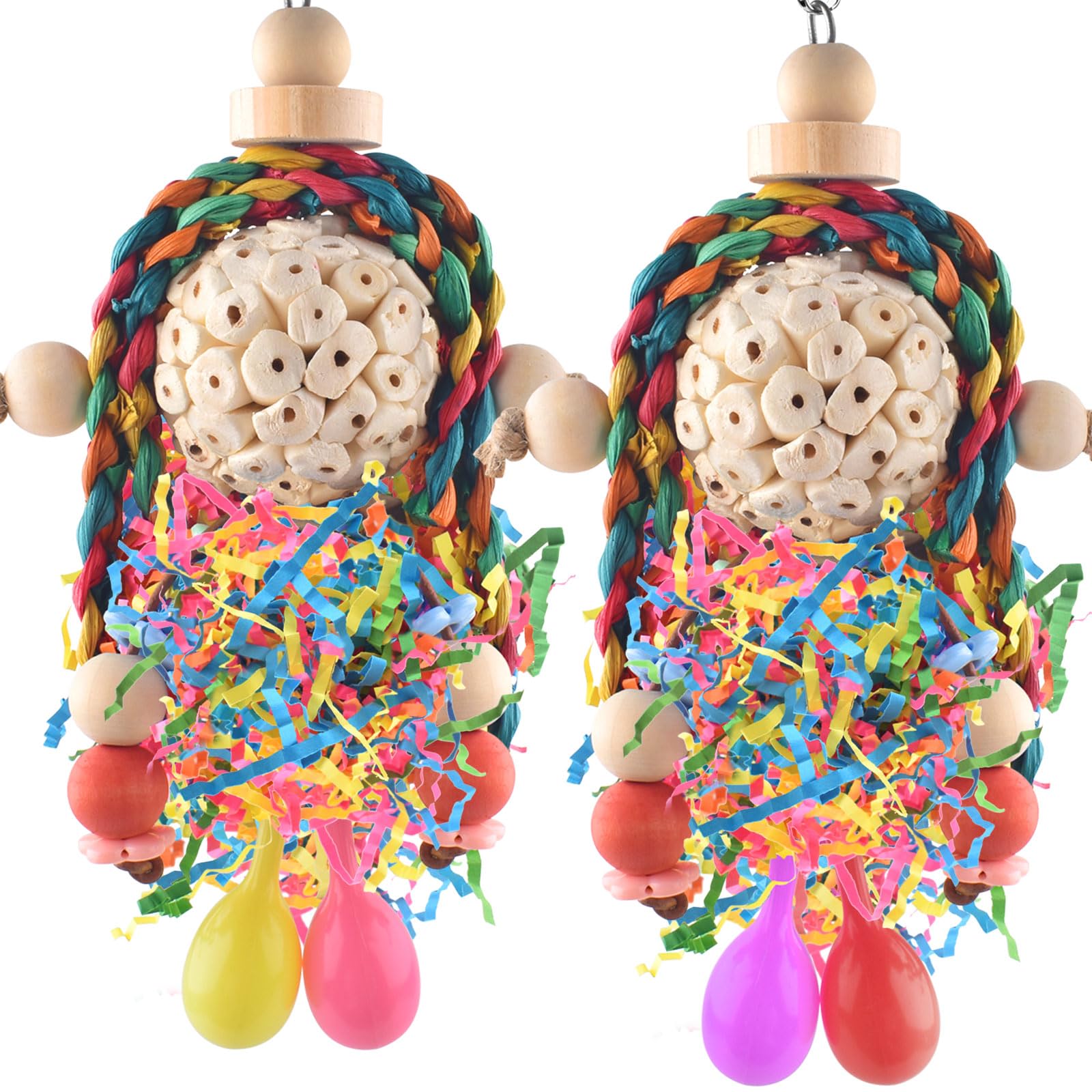
Bissap Conure Toys, 2PCS Bird Parrot Foraging Shredder Hangi...
Highly recommended bird fetch with a 4.6★ rating.
View on AmazonThe Bissap Conure Toys set is an exceptional choice for owners of small to medium parrots. At an incredible price point of just $1.21, it offers a multi-sensory experience. It features sola balls—a soft, natural material that birds love to sink their beaks into—and a sand hammer for auditory stimulation. With a 4.6-star rating, it’s a community favorite for a reason: it’s perfect for birds who need to stay busy.
Building a Deeper Bond Through Play
One of the most rewarding aspects of 'bird fetch' is the bond it creates between you and your pet. Birds are intensely social creatures. In the wild, they learn through observation and interaction with their flock mates. When you become the 'playmate,' you are reinforcing your position as a trusted member of their flock.
Spending just 15 to 20 minutes a day in active play can drastically reduce a bird's anxiety. It builds trust, especially with rescued birds who may be wary of human hands. By using toys as an intermediary, you create a safe space for interaction that doesn't feel threatening.
How to Choose the Right Playthings
Not all toys are created equal. When selecting items for your bird's 'fetch' and play sessions, consider the following:
- Safety First: Ensure materials are non-toxic. Natural fibers, untreated wood, and vegetable-dyed papers are best.
- Texture Variety: Birds love to explore with their tongues. Mix soft sola wood with harder beads or crunchy paper.
- Appropriate Sizing: Ensure the toy is sized correctly for your bird's beak strength. A toy that is too large can be intimidating, while one that is too small can be a choking hazard.
The Bissap Conure Toys we mentioned earlier are particularly effective because they use shreddable materials. For a bird, the act of destroying a toy is a sign of a job well done! It provides immediate feedback and a sense of accomplishment that a plastic toy simply cannot match.
The PawPicks Final Word
As bird owners, our goal is to provide a life that is as rich and fulfilling as the one they would have in the wild. While we can't give them the endless sky, we can give them the mental equivalent through play. A 'good fetch'—whether it’s a game of toss, a foraging puzzle, or a shredding marathon—is the key to a long, happy, and scream-free life for your feathered friend.
Don't let your bird's cage be a place of boredom. Invest in their happiness today by introducing interactive toys that challenge their minds and delight their senses. Remember, a busy beak is a happy beak!