The Tiny But Mighty Chewers: Understanding Your Small Pet
If you share your home with a rabbit, a guinea pig, a hamster, or a chinchilla, you’ve likely noticed a common theme: they are obsessed with chewing. From the corner of your baseboards to the legs of your favorite wooden chair, nothing seems safe from those tiny, industrious teeth. While it might feel like your pet is simply being destructive, as a pet behaviorist, I can tell you that chewing is far more than a naughty habit. It is a biological necessity and a fundamental pillar of their overall well-being.
Small mammals are unique in the animal kingdom. Unlike humans, whose teeth grow to a certain size and stop, many small pets possess hypsodont teeth. This means their teeth have open roots and continue to grow throughout their entire lives. Without constant wear and tear, these teeth can become a source of extreme pain and life-threatening health issues. Today at PawPicks, we’re diving deep into the science of chewing and why providing the right toys is the most important thing you can do for your small companion.
The Biology of the 'Ever-Growing' Tooth
To understand why your rabbit or guinea pig needs a good chew, we have to look at their anatomy. In the wild, these animals spend the majority of their waking hours foraging. Their diet consists of tough, fibrous grasses and woody plants. To process this coarse material, their teeth evolved to grow continuously to compensate for the constant grinding.
What Happens When They Don't Chew?
When a small pet doesn't have access to appropriate chewing materials, their teeth can overgrow at an alarming rate. This leads to a condition known as malocclusion. Malocclusion occurs when the upper and lower teeth no longer align correctly. This can result in:
- Sharp Spurs: Overgrown teeth can develop razor-sharp points that cut into the pet's cheeks or tongue, causing painful ulcers.
- Abscesses: Long roots can push back into the jawbone or even toward the eye sockets, leading to severe infections.
- Starvation: If a pet's teeth are too long or painful, they will stop eating entirely. For small animals, even 24 hours without food can lead to a fatal condition called GI stasis.
By providing high-quality chew toys, you aren't just giving them a toy; you are providing preventative healthcare.
More Than Just Physical: The Mental Side of Gnawing
While the dental benefits are the most obvious, we cannot overlook the psychological impact of chewing. Small animals are highly intelligent and inquisitive. In a domestic setting, they often lack the complex environmental challenges they would face in the wild. This can lead to boredom, stress, and anxiety.
Stress Relief and Enrichment
Chewing is a natural self-soothing behavior. It releases endorphins in small mammals, helping them feel calm and secure. When you provide a variety of textures—such as hay, wood, and wicker—you are offering environmental enrichment. This keeps their minds active and prevents them from developing stereotypical behaviors, like bar-biting in hamsters or excessive fur-plucking in rabbits.
Think of a chew toy as a puzzle. Your pet has to figure out how to grip it, where the best place to bite is, and how to eventually break it down. This mental workout is just as important as physical exercise for a happy, well-adjusted pet.
Choosing the Right Materials: What to Look For
Not all chew toys are created equal. As a responsible pet owner, it’s crucial to select items that are safe, non-toxic, and effective. Here are the gold-standard materials for small animal chews:
- Timothy Hay: The backbone of any small herbivore's diet. Compressed hay toys offer the same dental benefits as loose hay but in a fun, interactive shape.
- Apple Wood and Willow: These are safe, pesticide-free woods that provide a satisfying crunch and are excellent for wearing down incisors.
- Loofah and Seagrass: These softer fibers are great for cleaning the teeth and providing a different tactile experience.
If you are looking for a comprehensive solution that covers all these bases, we have a top-tier recommendation that has been vetted by both experts and pet parents alike.

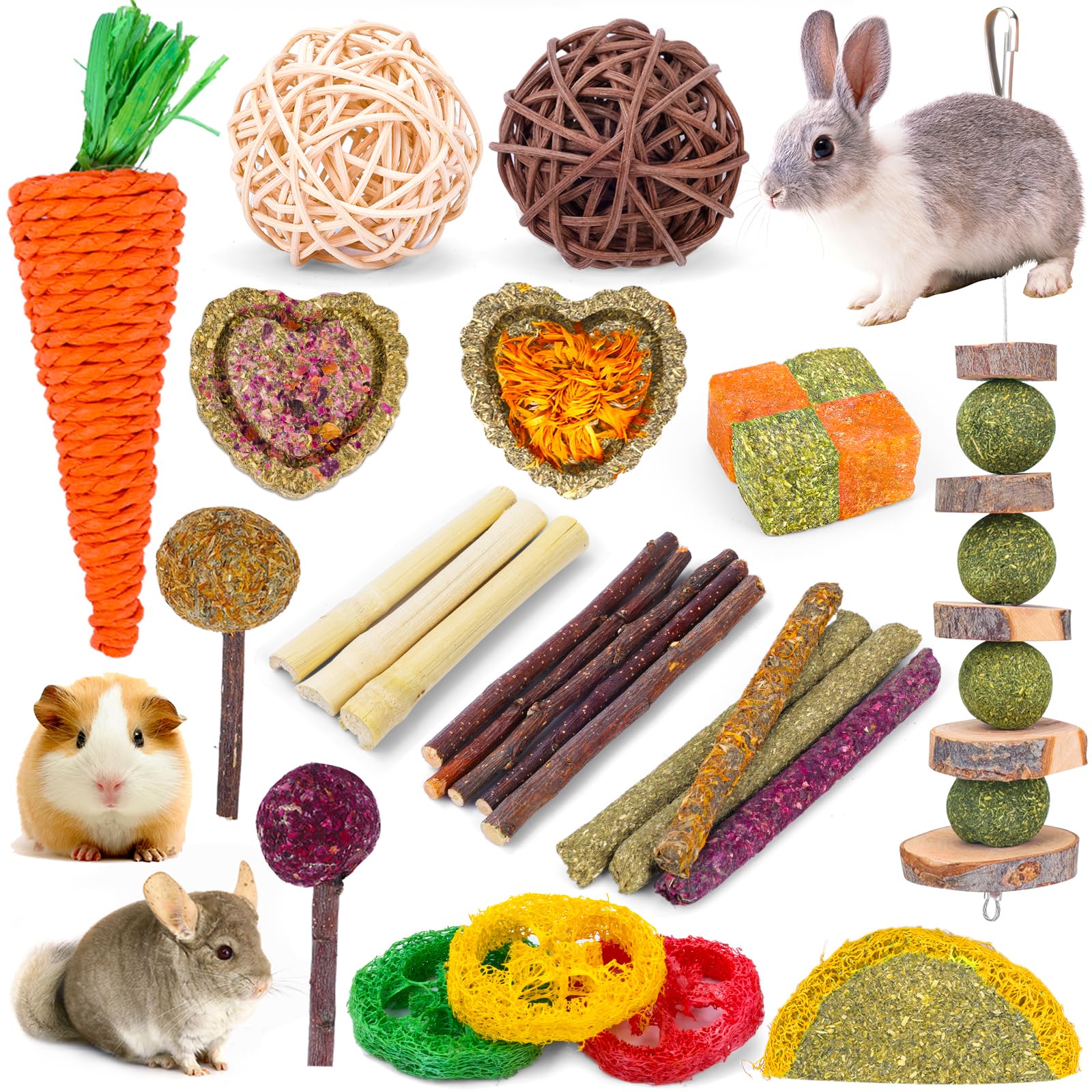
VESPRO Rabbit Bunny Toys for Rabbits Hamster Guinea Pig Toys...
Highly recommended small_animal chew with a 4.6★ rating.
View on AmazonThe VESPRO Rabbit Bunny Toys set is an exceptional choice because it offers variety. It includes natural Timothy hay sticks, chew treats, and balls made from organic materials. This variety ensures that your pet doesn't get bored with just one texture. Priced at only $9.99, it’s an affordable way to ensure your pet’s dental health is managed effectively. With a 4.6-star rating, it is highly rated and perfect for small animals like rabbits, chinchillas, and guinea pigs.
How to Encourage Healthy Chewing Habits
Sometimes, a pet might be hesitant to try a new toy. If your furry friend is a picky chewer, here are a few professional tips to get them started:
1. The Rotation Strategy
Don’t give your pet all their toys at once. They can become overwhelmed or bored. Instead, offer two or three items and swap them out every week. This makes "old" toys feel new and exciting again.
2. Interactive Play
Many small animals love to play fetch or "tug-of-war" in their own way. Try rolling a hay ball toward your rabbit or lightly wiggling a willow stick to pique their curiosity. Once they grab it, they are much more likely to start gnawing.
3. Location Matters
Place chew toys in areas where your pet likes to relax. If your guinea pig has a favorite hidey-hole, place a Timothy hay stick inside. By putting the toys in their "safe zones," you encourage them to chew while they are resting.
Conclusion: A Happy Pet Starts with a Good Chew
As pet owners, we want the very best for our small companions. We provide them with the best food, cozy bedding, and lots of love. However, understanding their biological drive to chew is a key component of their care that cannot be ignored. By providing high-quality, natural chew toys like the VESPRO set, you are protecting them from painful dental disease, reducing their stress levels, and saving your furniture in the process!
Remember, a busy mouth is a happy heart. Keep those teeth in check, and your small pet will reward you with years of binkies, wheeks, and nose-twitches. Happy chewing!