The Biological Necessity of the 'Big Chomp'
If you are the proud parent of a rabbit, guinea pig, hamster, or chinchilla, you’ve likely noticed one thing: they are absolute chewing machines. From the corners of your baseboards to the legs of your favorite wooden chair, nothing seems safe. While this behavior can be frustrating for a pet owner, as a behaviorist, I can tell you it is far from a 'bad habit.' In fact, for small animals, chewing is a biological necessity as vital as breathing or eating.
Small mammals are unique in the animal kingdom because of their hypsodont teeth. Unlike human teeth, which grow to a certain size and stop, the incisors (and often the cheek teeth) of rodents and lagomorphs never stop growing. In some species, these teeth can grow as much as 2 to 4 millimeters every single week! Without constant wear and tear, these teeth would eventually grow into the roof of their mouth or out through their cheeks, leading to a painful and life-threatening condition called malocclusion.
More Than Just Teeth: The Psychological Benefits
While dental health is the primary driver, chewing serves a massive psychological purpose for small animals. In the wild, these creatures spend a significant portion of their day foraging, stripping bark, and digging. In a domestic setting, life can get a bit... well, boring. Without proper stimulation, small pets can develop 'cage blues,' leading to repetitive behaviors like bar-biting, over-grooming, or lethargy.
Providing a variety of textures to chew on acts as environmental enrichment. It keeps their minds sharp and satisfies their natural foraging instincts. When a rabbit strips the bark off a willow stick or a hamster deconstructs a rattan ball, they are engaging in complex problem-solving and physical exercise that reduces stress and promotes a longer, happier life.
The Dangers of Neglecting the Chew
What happens if your pet doesn't have access to high-quality chew toys? The consequences are more than just a nibbled rug. Malocclusion is the most common reason for vet visits among small mammals. Once the teeth are misaligned, the pet can no longer eat properly, leading to rapid weight loss and digestive shutdown (GI stasis), which is an absolute emergency for rabbits and guinea pigs.
Furthermore, pets that aren't given appropriate outlets for their chewing instincts will find their own. This often leads to them ingesting dangerous materials like carpet fibers, plastic, or treated wood from furniture, all of which can cause internal blockages or toxicity.
Choosing the Right Chew: Safety First
Not all chew toys are created equal. As a responsible pet owner, you need to ensure the materials you provide are organic, non-toxic, and free from pesticides. Natural woods like apple, willow, and birch are excellent choices. However, for a truly engaging experience, I always recommend toys that combine different textures and even a little 'reward' for their hard work.
One of the most effective ways to keep your pet engaged is through hanging toys. These encourage your pet to stretch and reach, providing a bit of a workout while they grind down those ever-growing teeth. If you're looking for a solution that hits all the marks—safety, engagement, and dental health—I have a specific recommendation that our community at PawPicks consistently raves about.

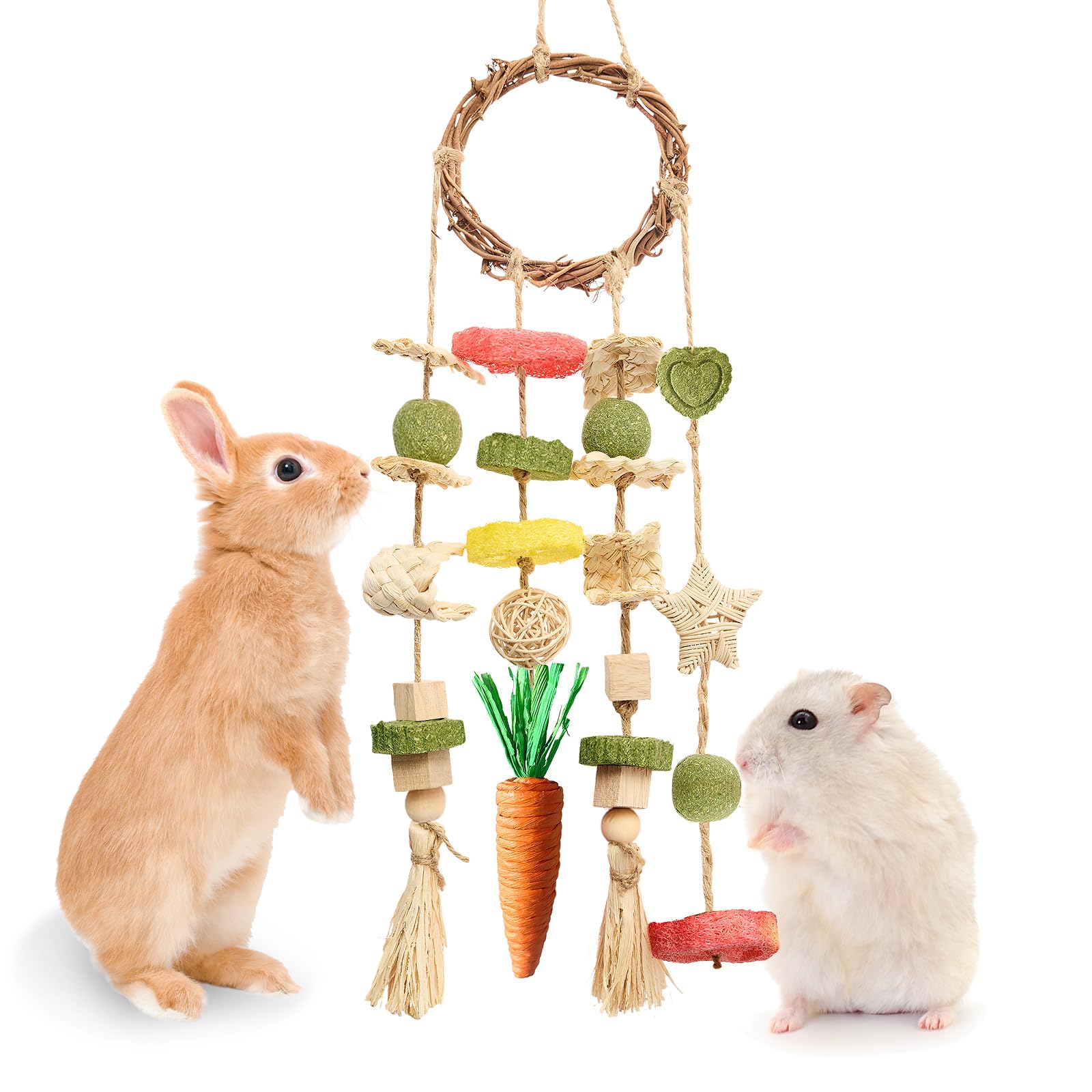
Jorewood Rabbit Chew Toys Bunny Cage Hanging Toy and Treats ...
Highly recommended small_animal chew with a 4.6★ rating.
View on AmazonAt just $7.49, this Jorewood Rabbit Chew Toy is a steal for the health benefits it provides. It features a rattan ring and various snacks that are perfect for rodent pets. With a stellar 4.6 rating, it is highly rated and perfect for small animals of all sizes. The combination of textures ensures that your pet won't get bored, and the hanging design keeps the treats clean and off the cage floor.
How to Encourage Your Pet to Use Their Toys
Sometimes, a pet might be hesitant to try a new toy, especially if they've grown accustomed to chewing on things they shouldn't. Here are a few behaviorist-approved tips to get them started:
- Location is Key: Place the chew toy near their favorite lounging spot. If they have to go out of their way to find it, they might just stick to the nearest baseboard.
- The Scent Factor: Some pets are more likely to chew if the toy smells like their favorite food. Rubbing a little bit of fresh apple or carrot on a wooden toy can pique their interest.
- Rotation: Don't give them all their toys at once. Rotate different textures every week to keep the 'novelty' factor high.
- Interaction: For social animals like rabbits, sometimes sitting with them and gently moving the toy can trigger their natural curiosity.
Common Materials to Avoid
While we want our pets to chew, we must be vigilant about what they are putting in their mouths. Avoid the following:
- Cedar and Pine: Untreated softwoods like these contain phenols that can cause respiratory issues and liver damage in small rodents.
- Plastic: While many commercial toys are made of plastic, aggressive chewers can swallow sharp shards, leading to internal injury.
- Glues and Dyes: Ensure any toy you buy uses food-grade coloring and non-toxic adhesives (or no glue at all, like the Jorewood model mentioned above).
The Bottom Line
Chewing isn't a luxury for your small pet; it is a fundamental pillar of their health. By providing high-quality, safe, and engaging chew toys, you are doing more than just protecting your furniture—you are preventing painful dental diseases and ensuring your pet lives a stimulated, stress-free life. Remember, a busy mouth is a happy pet!
Next time you see your bunny or hamster attacking a chew toy with gusto, take a moment to smile. You’re watching them do exactly what nature intended. Keep providing those healthy outlets, and your furry friend will thank you with years of companionship and 'binkies' of joy.