Welcome back to PawPicks, your trusted source for premium pet toy recommendations and expert behavioral advice! If you share your home with a small animal—be it a bouncy bunny, a chatty guinea pig, a curious chinchilla, or a busy hamster—you already know they bring immense joy into our lives. But along with their adorable antics comes a very specific, non-negotiable biological need: the need to chew.
As an expert pet behaviorist, I frequently consult with pet parents who are frustrated by their small pets gnawing on cage bars, destroying baseboards, or ruining furniture. Often, these owners view this behavior as "naughty" or destructive. In reality, your small animal isn't trying to misbehave; they are answering a primal, biological imperative. Providing a proper, high-quality chew toy is not just a fun treat; it is a fundamental requirement for their physical and mental well-being.
The Biological Imperative: Teeth That Never Stop Growing
To truly understand why small animals need to chew, we have to look inside their mouths. Unlike humans, dogs, or cats, rodents and lagomorphs (the family that includes rabbits) possess what are known as elodont teeth. This means their teeth are open-rooted and grow continuously throughout their entire lives.
In the wild, these animals consume a diet consisting of tough, fibrous vegetation—think coarse grasses, bark, twigs, and roots. The constant grinding required to break down this tough forage naturally files their teeth down, keeping them at a healthy, manageable length. However, in a domestic setting, even the highest quality timothy hay and commercial pellets often aren't enough to provide the necessary wear and tear.
The Dangers of Overgrown Teeth
When a small animal doesn't have adequate materials to chew on, their teeth can quickly become overgrown. This leads to a severe and painful condition known as malocclusion. Malocclusion occurs when the upper and lower teeth no longer align properly. As the teeth continue to grow, they can curve and grow into the animal's gums, cheeks, or even the roof of their mouth.
Symptoms of dental issues in small animals include:
- Drooling or a consistently wet chin (often called "slobbers")
- A sudden loss of appetite or refusal to eat hard foods
- Weight loss and lethargy
- Swelling around the jaw or face
- Visible overgrowth of the front incisors
Treating malocclusion requires veterinary intervention, often involving putting the animal under anesthesia to physically file or trim the teeth. This is stressful for your pet and expensive for you. The good news? The vast majority of these dental issues are entirely preventable simply by providing a steady supply of engaging, safe chew toys.
Psychological Benefits: Busting Boredom and Anxiety
Beyond the physical necessity of dental maintenance, chewing serves a massive psychological role in a small animal's life. In their natural habitats, these creatures spend a significant portion of their waking hours foraging, gnawing, and exploring. When confined to a cage or a safe room, they can easily become bored.
Boredom in small animals frequently manifests as stress, anxiety, and stereotypy (repetitive, functionless behaviors like pacing or obsessive cage-bar biting). Chewing acts as a natural stress reliever. The physical act of gnawing releases endorphins, calming your pet's nervous system and providing a highly satisfying outlet for their natural energy.
By offering a variety of textures and shapes to chew on, you are providing crucial mental enrichment. A busy bunny or an occupied hamster is a happy, well-adjusted pet!
How to Choose the Right Chew Toy
Not all chew toys are created equal. When selecting a chew for your small animal, safety and engagement are paramount. You want to look for materials that are 100% safe to ingest in small quantities, as your pet will inevitably swallow tiny fibers as they gnaw.
Ideal materials include:
- Untreated woods (like apple, willow, or birch)
- Natural woven materials (like rattan, seagrass, or sisal)
- Loofah or pumice stone
- Compressed timothy hay
It is equally important to avoid anything treated with pesticides, chemicals, or artificial dyes that could upset a delicate herbivore's digestive tract. Furthermore, a good chew toy should be interactive. Toys that hang, roll, or hide treats encourage your pet to work for their reward, mimicking natural foraging behaviors.
Our Top Pick for Small Animal Dental Health
Finding a chew toy that hits all the right notes—safety, engagement, and irresistible taste—can sometimes feel like a daunting task. You want something that will hold their attention long enough to provide meaningful dental wear. That’s why we are absolutely thrilled to recommend a product that seamlessly combines foraging fun with top-tier dental care.

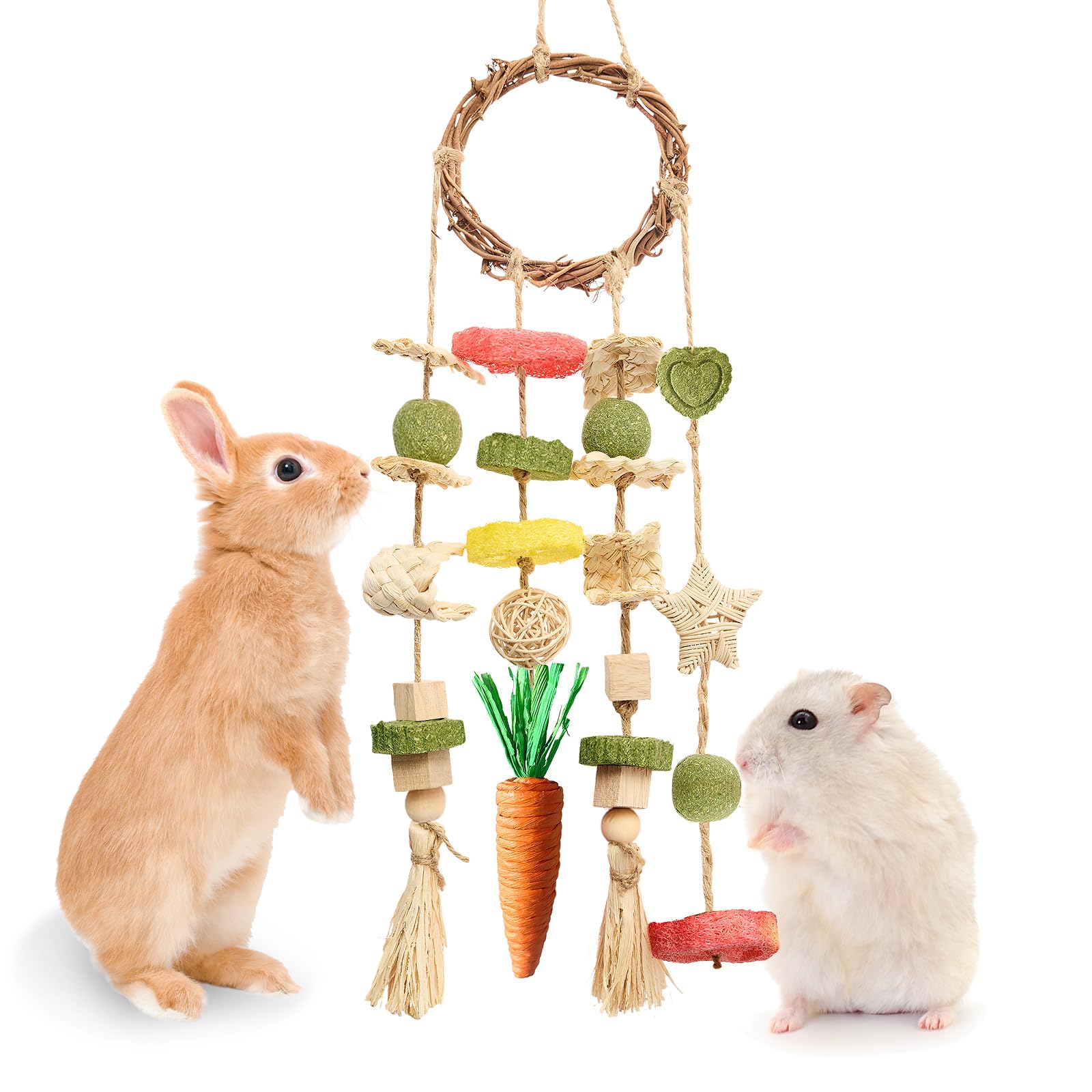
Jorewood Rabbit Chew Toys Bunny Cage Hanging Toy and Treats ...
Highly recommended small_animal chew with a 4.6★ rating.
View on AmazonPriced beautifully at just $6.35, the Jorewood Rabbit Chew Toys is an absolute must-have for your furry friend's habitat. Boasting a stellar 4.6-star rating, this hanging toy is practically perfect for small_animals. The brilliant combination of a natural rattan ring intertwined with pet-safe snacks makes it completely irresistible, even for the pickiest of chewers.
Because it hangs from the cage, it requires your pet to reach, stretch, and interact with it, turning chew time into a full-body physical activity. The varied textures of the rattan and the treats ensure their ever-growing teeth get the rigorous workout they desperately need.
Expert Tips to Encourage Healthy Chewing Habits
Even with the best toys on the market, some small animals need a little encouragement to start chewing appropriately. Here are a few behaviorist-approved tips to get your pet gnawing:
- Rotate Their Toys: Just like human toddlers, small pets get bored of looking at the same toys every day. Keep a "toy box" and rotate their chews every few days to keep the novelty alive.
- Location is Key: Place chew toys in areas where your pet naturally likes to hang out. If they have a favorite corner, hang the Jorewood toy right there. If they tend to chew on a specific cage bar, secure a wooden block over that exact spot.
- Infuse with Flavor: If your pet ignores a wooden chew, try rubbing a tiny bit of fruit (like a slice of apple or banana) on the wood. The lingering scent and flavor will entice them to take that first exploratory bite.
- Provide Variety: Offer different textures simultaneously. A soft loofah toy, a hard pumice stone, and a crunchy rattan ring provide a sensory buffet that caters to whatever "chew mood" your pet is in.
Conclusion: Chewing is Caring
At the end of the day, understanding and accommodating your small pet's need to chew is one of the most vital aspects of responsible pet ownership. It is not an optional luxury; it is a pillar of their physical health and emotional happiness. By providing safe, engaging, and tasty options like the Jorewood hanging chew, you are actively preventing painful dental diseases, curbing destructive behaviors, and ensuring your tiny companion lives a long, joyful life.
Thank you for stopping by PawPicks! Keep an eye on our blog for more expert tips, behavioral deep-dives, and premium product recommendations designed to make your pet parenting journey a breeze.