Understanding the Equine Mind: Why Horses Aren’t Just Pasture Ornaments
As a pet behaviorist, I often encounter owners who view their horses as majestic, stoic creatures that simply need grass, water, and a good saddle. However, horses are incredibly social, highly intelligent mammals with a cognitive capacity that rivals some of our favorite domestic pets. In the wild, horses spend the vast majority of their day foraging, interacting with a herd, and navigating complex environments. When we bring them into a domestic setting—particularly one involving stall time—we take away many of those natural stimuli.
This is where equine enrichment comes into play. Just like a bored dog might chew up your favorite shoes, a bored horse will find ways to entertain themselves, often to the detriment of their health and your stable. Providing toys isn't just about 'fun'; it is a fundamental part of responsible horse ownership that addresses their psychological and physiological needs.
The Evolutionary Need for Stimulation
In their natural habitat, horses are 'trickle feeders' and constant explorers. Their brains are hardwired to seek out variety. When a horse is confined to a paddock or a stall with the same view every day, their mental health can rapidly decline. Toys serve as a surrogate for the challenges they would face in the wild, keeping their neural pathways active and their stress levels low.
The Hidden Dangers of Horse Boredom
Boredom in horses isn't just a minor inconvenience; it can lead to serious behavioral and physical health issues. When a horse lacks mental stimulation, they often develop what behaviorists call 'stereotypies' or stable vices. These are repetitive behaviors that serve as a coping mechanism for stress and lack of environmental complexity.
Recognizing Common Stable Vices
- Cribbing: The horse grabs a solid object with their teeth and gulps air. This can lead to dental wear and digestive issues.
- Weaving: A rhythmic swaying of the head and forequarters, which puts unnecessary strain on their joints and ligaments.
- Stall Walking: Pacing the perimeter of the stall, leading to weight loss and hoof wear.
- Wood Chewing: Unlike cribbing, this involves actually consuming the wood, which can cause splinters and colic.
By introducing high-quality horse toys, you can redirect this nervous energy into productive play, significantly reducing the occurrence of these harmful behaviors.
How Toys Improve Your Horse’s Quality of Life
The benefits of enrichment extend far beyond just preventing bad habits. Engaging your horse in play can improve their overall temperament and even their performance under saddle. A horse that is mentally satisfied is generally more relaxed, more willing to learn, and less reactive to new stimuli.
Cognitive Development and Problem Solving
Many modern horse toys are designed to challenge the horse's problem-solving skills. For example, treat-dispensing balls require the horse to figure out how to nudge the object to release a reward. This type of 'work-to-eat' enrichment mimics natural foraging behavior and provides a sense of accomplishment that boosts the horse's confidence.
Reducing Stress During Confinement
Whether it is due to injury-related stall rest, inclement weather, or a standard boarding schedule, horses spend a significant amount of time indoors. This confinement can lead to a spike in cortisol (the stress hormone). Toys provide a much-needed distraction, helping the horse pass the time peacefully and preventing the buildup of 'pent-up' energy that often leads to explosive behavior when they are finally turned out.
Choosing the Right Enrichment for Your Horse
Every horse has a unique personality. Some are 'mouth-oriented' and love to pick things up and toss them, while others are 'foot-oriented' and prefer to kick or push objects. When selecting a toy, consider your horse's specific play style. Visual stimulation is also a key factor in a horse's environment. Horses are naturally curious about new shapes and colors, and adding a touch of variety to their stable area can pique their interest and keep them engaged with their surroundings.
For owners looking to add a unique form of visual and interactive enrichment to their horse's life, we have a specific recommendation that brings both charm and stimulation to the stable environment.

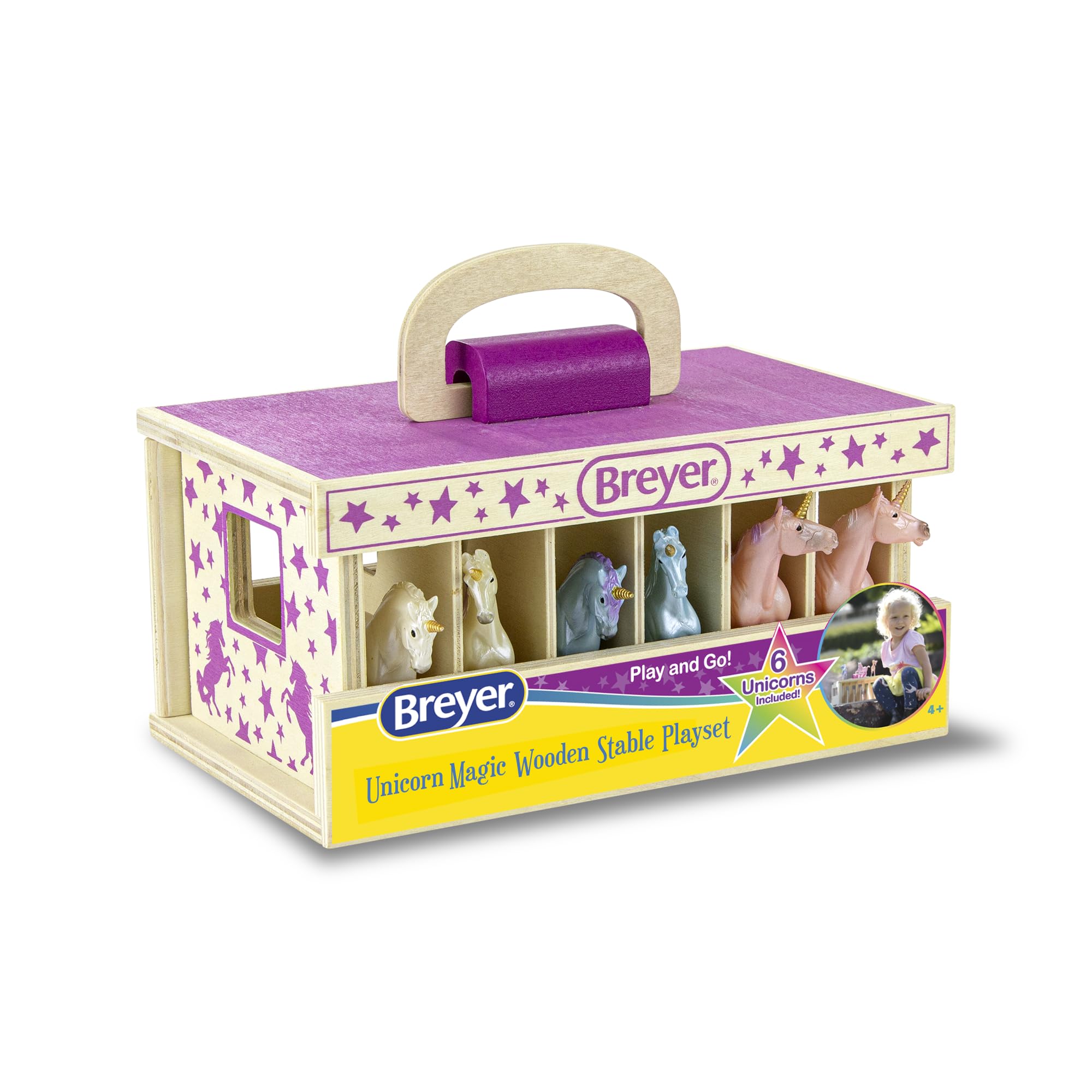
Breyer Unicorn Magic Wood Carry Stable with 6 Unicorns 59218...
Highly recommended horse toy with a 4.6★ rating.
View on AmazonWhile we often focus on heavy-duty rubber items, the Breyer Unicorn Magic Wood Carry Stable offers a different kind of value. It is highly rated and perfect for horses as a form of visual enrichment. Placing such items where a horse can observe them—or using them during interactive 'bonding time' with younger enthusiasts in the barn—can provide the novel visual stimuli that curious horses crave. Its vibrant colors and distinct shapes are excellent for catching a horse's eye and breaking the monotony of a plain wooden stall.
Safety First: What to Look for in Equine Toys
As a behaviorist, safety is my top priority. When you are introducing a new toy to your horse, always supervise their first few interactions. Here are a few guidelines to ensure a safe play experience:
- Durability: Ensure the material can withstand the immense pressure of a horse's jaw or the weight of a hoof.
- No Small Parts: Avoid toys with detachable pieces that could be swallowed or inhaled.
- Non-Toxic Materials: Since horses often explore with their mouths, ensure all plastics and paints are lead-free and non-toxic.
- Size Appropriateness: The toy should be large enough that it cannot be accidentally swallowed or wedged in the horse's mouth.
Conclusion: Investing in Your Horse’s Happiness
At the end of the day, a horse is more than just an animal we ride; they are our partners and companions. Investing in their mental health through proper enrichment is one of the kindest things a horse owner can do. By providing toys that stimulate their minds, challenge their problem-solving skills, and brighten their environment, you are ensuring a longer, happier, and more balanced life for your equine friend.
Next time you visit the stable, take a moment to look at the world through your horse's eyes. Is it a world of endless repetition, or is it a world filled with curiosity and play? With the right tools and a little bit of creativity, you can transform their daily routine into an engaging adventure. Happy playing!