Beyond the Glass: Why Your Fish Craves More Than Just Food
For decades, the image of a pet fish was a solitary creature swimming in circles within a tiny glass bowl. As a pet behaviorist, I can tell you that this image is not only outdated—it’s detrimental to the animal's well-being. At PawPicks, we believe every pet deserves a life full of stimulation, and that includes our aquatic friends. If you’ve ever wondered if your fish is bored, the answer is likely yes. Fish are far more intelligent and emotionally complex than most people give them credit for.
In the wild, fish navigate complex ecosystems, evade predators, hunt for food, and interact with a variety of textures and currents. When we bring them into our homes, we have a responsibility to replicate that complexity. Providing fish toys and enrichment isn't just about 'cuteness'; it is a fundamental requirement for their mental and physical health.
The Surprising Intelligence of Our Finny Friends
Research has shown that many fish species, particularly Bettas, Goldfish, and Cichlids, possess remarkable cognitive abilities. They can recognize their owners, be trained to swim through hoops, and even solve simple puzzles. When a fish is kept in a barren environment, they often fall victim to 'learned helplessness' or chronic stress. This manifests in behaviors like 'glass surfing'—where the fish swims frantically up and down the side of the tank—or extreme lethargy.
By introducing the right environment and interactive elements, you are providing cognitive stimulation that keeps their brains sharp and their immune systems strong. A happy fish is a healthy fish, and a healthy fish lives a significantly longer life.
What Does a 'Fish Toy' Actually Look Like?
When we talk about toys for dogs, we think of balls and ropes. For fish, a 'toy' is anything that encourages natural behaviors. This can be categorized into several types of enrichment:
- Physical Enrichment: Objects like caves, tunnels, and floating logs that allow the fish to explore and claim territory.
- Sensory Enrichment: Changes in water flow, varied lighting cycles, or even mirrors (used sparingly for Bettas) that engage their senses.
- Occupational Enrichment: Items that make them 'work' for their food, such as specialized feeders or live plants that harbor micro-prey.
- Social Enrichment: While some fish are solitary, others require the presence of tank mates or even interaction with their human caregivers through the glass.
Without these outlets, fish can become depressed. Yes, you read that correctly. Fish can experience a state of low-arousal and lack of interest that mirrors mammalian depression, often caused by a stagnant environment.
The Foundation of Fun: Choosing the Right Habitat
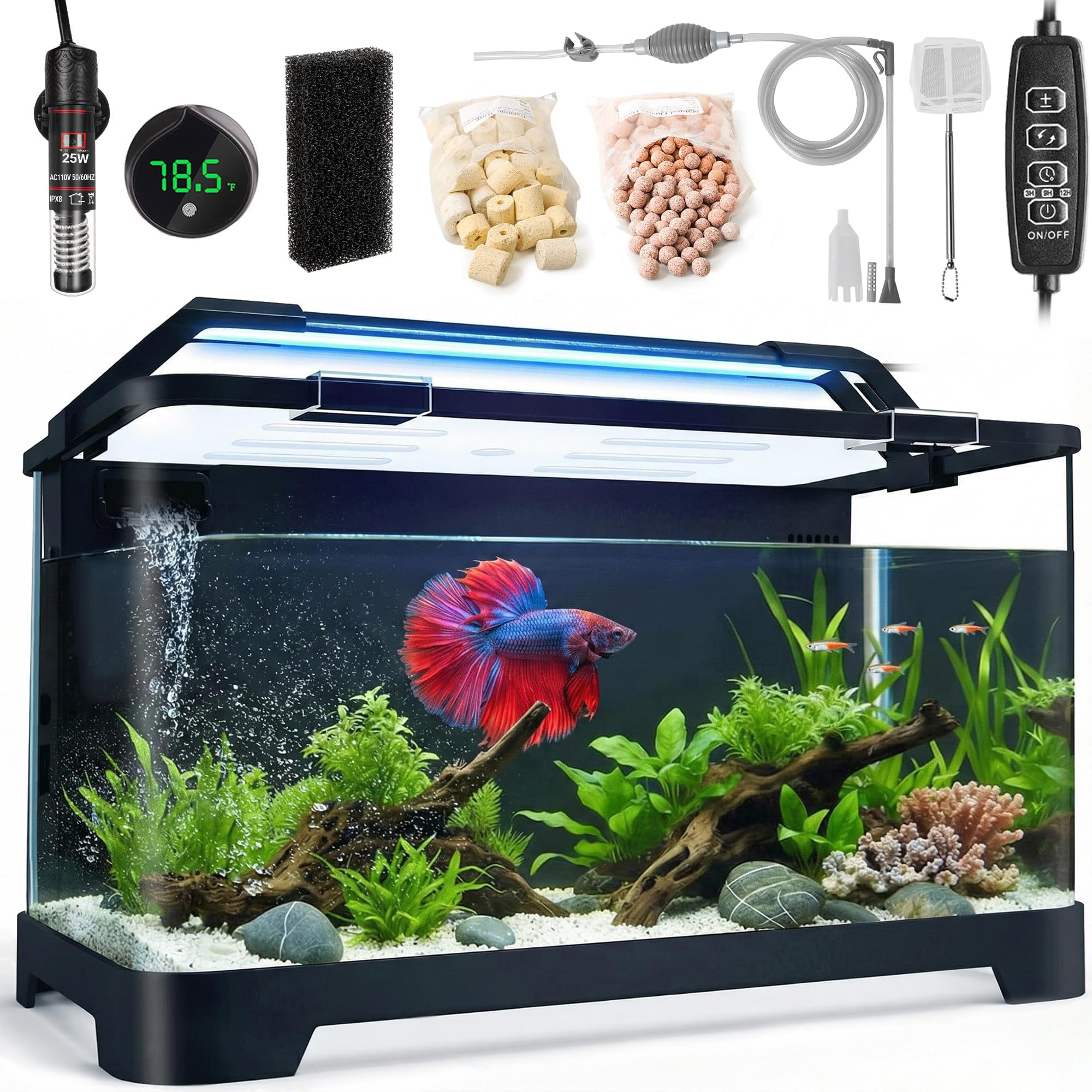
Before you can add toys, you must ensure the 'playground' itself is up to par. A fish cannot enjoy a toy if they are struggling to breathe or if the water temperature is fluctuating. Enrichment starts with the tank setup. A cramped space is a cage, but a well-designed aquarium is a kingdom. This is why we recommend starting with a high-quality, all-in-one system that manages the 'boring' stuff (like filtration and heat) so you can focus on the 'fun' stuff (like decor and interaction).

3.5 Gallon Aquarium Starter Kits, Betta Fish Tank with Heate...
Highly recommended fish toy with a 4.2★ rating.
View on AmazonThe 3.5 Gallon Aquarium Starter Kit mentioned above is an excellent example of a foundation for enrichment. It is highly rated and perfect for fishs, providing the essential hidden filtration and consistent heating that Bettas and other nano-fish need to feel active enough to play. At $94.99, it’s an investment in your pet's long-term happiness, boasting a 4.2-star rating from fellow fish enthusiasts.
How to Introduce Toys Safely
As an expert behaviorist, I always caution owners to prioritize safety. Not all aquarium decor is created equal. When selecting toys to add to your new 3.5-gallon setup, keep these rules in mind:
- Avoid Sharp Edges: Run a pair of pantyhose over any plastic toy. If it snags the fabric, it will tear your fish's delicate fins.
- Non-Toxic Materials: Only use items specifically labeled for aquarium use. Some plastics leach chemicals that can be fatal to aquatic life.
- Size Matters: Ensure there are no holes small enough for your fish to get stuck in. If they can fit their head in, they might try to swim through and get wedged.
- Quarantine and Clean: Always rinse new toys in dechlorinated water before adding them to the tank.
Interactive Play: Yes, You Can Play With Your Fish!
One of the most rewarding aspects of fish ownership is the bond you build. You can use a clean finger or a soft-tipped 'feeding wand' to lead your fish around the tank. Many Bettas will follow a laser pointer (just like a cat!) or swim through a craft-mesh hoop for a treat. This type of positive reinforcement training is the ultimate form of enrichment. It reduces the fish's fear of humans and provides intense mental engagement.
Another great 'toy' is a simple ping-pong ball. For many surface-dwelling fish, a floating ball provides hours of entertainment as they 'bunt' it around the surface. It’s cheap, safe, and fascinating to watch.
Conclusion: A Happy Tank is a Beautiful Tank
Ultimately, providing toys and a stimulating environment for your fish is about more than just their health—it transforms your aquarium into a dynamic, living piece of art. When your fish is active, exploring caves, and interacting with their environment, they display more vibrant colors and more interesting behaviors.
Don't settle for a boring bowl. Start with a solid foundation like a high-quality starter kit, and then let your creativity run wild. Your fish has a big personality waiting to be discovered; all they need is the right environment to let it shine. Remember, at PawPicks, we believe every pet, no matter how small, deserves a life full of play!