The Hidden Predator in Your Living Room
To the untrained eye, a domestic cat is a master of leisure. They spend upwards of 16 hours a day napping in sunbeams, grooming their velvet fur, and occasionally demanding a treat with a perfectly timed meow. However, as a pet behaviorist, I see something different when I look at your feline companion. Beneath that soft exterior lies a finely tuned apex predator with biological drives that haven't changed much since their ancestors roamed the deserts of the Near East.
When we bring cats into our homes, we provide them with safety, warmth, and consistent meals. But in doing so, we often inadvertently strip away their primary occupation: the hunt. In the wild, a cat would spend a significant portion of its waking hours stalking, chasing, and capturing prey. When this energy has no outlet, it doesn't just disappear; it manifests in ways that can be frustrating for owners and stressful for the cats themselves.
Why Boredom is a Health Risk for Cats
Boredom in cats isn't just about a lack of entertainment; it is a legitimate welfare concern. A bored cat is often a stressed cat. Without the mental and physical stimulation provided by interactive play, cats can develop a range of behavioral and health issues that many owners mistake for 'bad' personality traits.
Signs Your Cat is Craving Stimulation
- Destructive Behavior: Shredding curtains, knocking items off shelves, or scratching furniture they usually ignore.
- The Midnight Zoomies: Excessive running and vocalizing at night is often a sign of pent-up energy that wasn't expended during the day.
- Over-Grooming: Cats may lick themselves until they develop bald spots as a way to self-soothe when they are under-stimulated or anxious.
- Inter-pet Aggression: If your cat is suddenly pouncing on the dog or stalking your ankles, they are likely trying to initiate a 'hunt' because they have no other prey.
- Depression and Lethargy: While cats sleep a lot, a cat that shows no interest in their environment may be suffering from a lack of enrichment.
The Science of the 'Hunt-Catch-Kill' Sequence
Effective play isn't just about moving a string back and forth. To truly satisfy a cat, we must tap into their natural 'Prey Drive.' This is a specific neurological sequence: Stalk, Pounce, Kill, Eat, Groom, Sleep.
Static toys—like a stuffed mouse left in the middle of the floor—quickly become 'dead' prey in a cat's mind. Once a toy stops moving in an unpredictable way, it loses its value. This is why interactive toys are non-negotiable for a happy home. They mimic the erratic movements of insects, rodents, or birds, keeping the cat’s brain engaged and their body in motion. When a cat successfully 'captures' a moving toy, their brain releases dopamine, providing a sense of accomplishment and reducing cortisol (the stress hormone).
Physical Fitness: Keeping the 'Chonk' at Bay
Feline obesity is an epidemic in the modern pet world. It leads to diabetes, joint pain, and a significantly shortened lifespan. Because indoor cats don't have to travel for their food, they often consume more calories than they burn. Interactive play is the most effective way to manage a cat's weight. Short, high-intensity bursts of activity—much like HIIT workouts for humans—are perfect for a cat’s physiology. Engaging them in 10 to 15 minutes of vigorous play twice a day can keep their metabolism high and their muscles toned.
The Unpredictability Factor: Why Springs are King
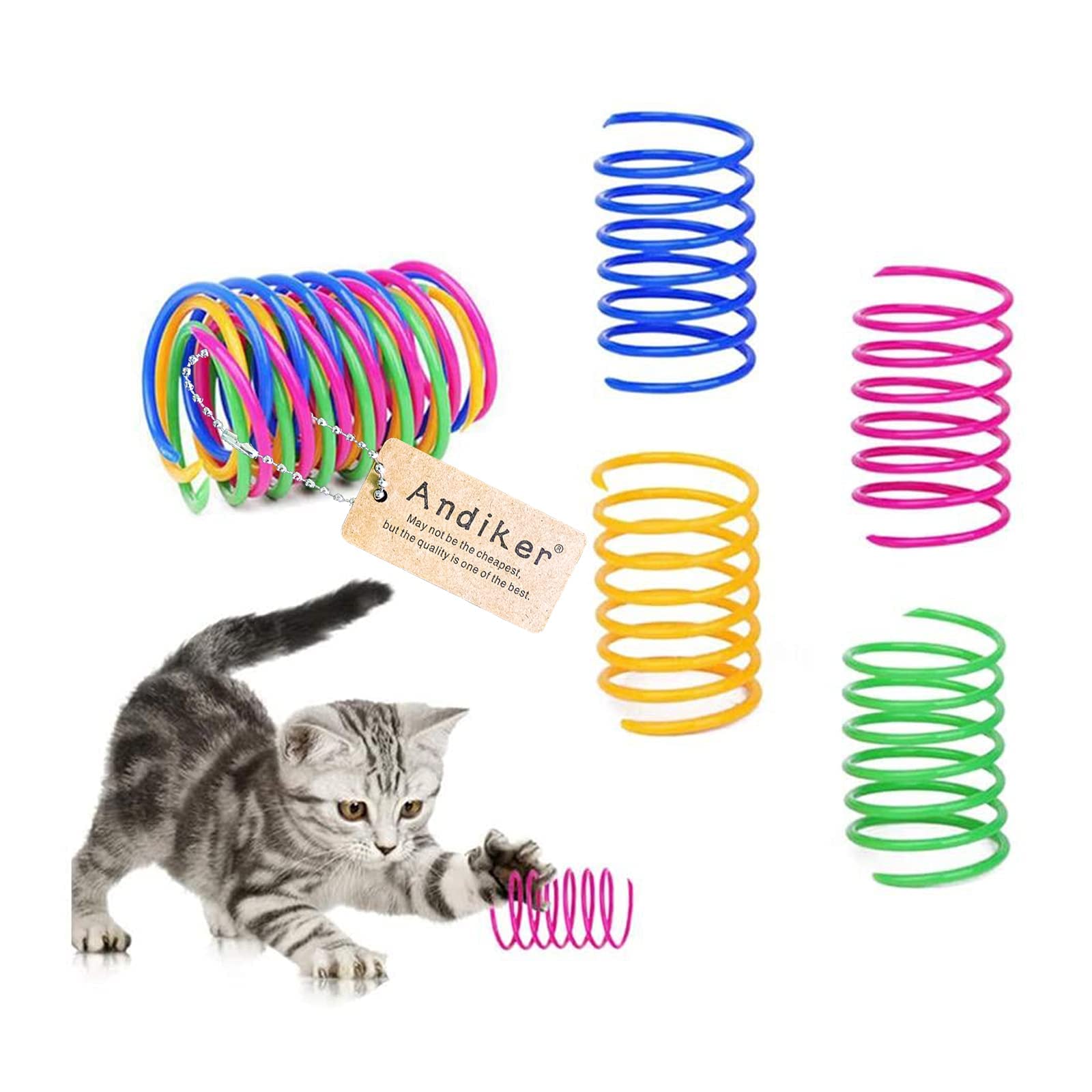
If you've ever watched a cat play with a simple plastic spring, you’ve seen pure instinct in action. Unlike a ball that rolls in a predictable line, a spring bounces, skitters, and changes direction at the slightest touch. This unpredictability is exactly what triggers the feline brain. It mimics the frantic escape attempt of a grasshopper or a small mouse, forcing the cat to calculate angles and use their paws with precision.
For owners looking to provide this level of engagement without breaking the bank, there is one specific tool that behaviorists and owners alike swear by. It’s simple, durable, and incredibly effective at keeping cats of all ages active.

Andiker Interactive Cat Spiral Creative Spring Toy to Kill T...
Highly recommended cat interactive with a 4.6★ rating.
View on AmazonThe Andiker Interactive Cat Spiral is a masterclass in feline enrichment. Made from sturdy, heavy-duty plastic, these colorful springs are designed to withstand the biting and swatting of even the most enthusiastic kittens. Because they come in a pack of 12, you don't have to worry when one inevitably disappears under the refrigerator—a common 'hunting' outcome in most households! At a price point that is accessible to everyone, it is one of the best investments you can make for your cat's daily fitness routine.
Mental Enrichment: More Than Just a Game
Beyond the physical benefits, interactive toys provide cognitive stimulation. When a cat has to figure out how to retrieve a toy from a corner or anticipate where a spring will bounce next, they are using their problem-solving skills. This is especially important for indoor cats, whose environments are relatively static. A lack of cognitive challenge can lead to premature cognitive decline in senior cats. By keeping their minds sharp through play, you are essentially providing 'brain games' that keep them young at heart.
How to Get the Most Out of Playtime
To ensure your cat stays interested in their toys, follow these expert tips:
- Toy Rotation: Don't leave all the toys out at once. Keep a few in a drawer and swap them every few days to maintain the 'novelty' factor.
- The 'Grand Finale': Always end a vigorous play session by letting the cat 'catch' the toy, followed immediately by a small treat or meal. This completes the biological Hunt-Catch-Eat cycle.
- Vary the Texture: Cats are tactile. Mixing hard plastic springs with soft feathers or crinkly fabrics keeps their sensory experience diverse.
- Vertical Play: Use toys to encourage your cat to jump onto cat trees or low shelves. This builds core strength and utilizes their three-dimensional hunting skills.
Conclusion: A Happy Cat is an Active Cat
At PawPicks, we believe that a well-played cat is a well-behaved cat. By understanding the deep-seated instincts of your 'house tiger' and providing the right tools for interactive play, you aren't just entertaining them—you are fulfilling a biological necessity. Whether it's through the erratic bounce of a spiral spring or a dedicated session with a feather wand, the time you spend engaging your cat is the best way to ensure a long, healthy, and harmonious life together. Don't wait for the next midnight zoomie session to realize your cat is bored; start their fitness journey today!