The Secret Life of Your Indoor Hunter
As a pet behaviorist, I often hear the same complaint from cat owners: "My cat just sleeps all day and then goes crazy at 3 AM." Or worse, "My cat has started scratching the sofa and attacking my ankles." To the untrained eye, these seem like random acts of feline mischief. But to those of us who study animal behavior, these are clear distress signals from a bored, under-stimulated predator.
We often forget that our fluffy companions are, genetically speaking, 95.6% tiger. While we have provided them with the safety of our homes and the luxury of premium kibble, we have also inadvertently stripped away their primary occupation: the hunt. In the wild, a cat spends a significant portion of its waking hours stalking, chasing, and pouncing. When we remove that outlet, we create a vacuum that is often filled with anxiety, obesity, and behavioral problems. This is where interactive play becomes not just a luxury, but a biological necessity.
The Biology of the Pounce: Why Movement Matters
Cats are built for short, explosive bursts of energy. Their musculoskeletal system is a masterpiece of evolution, designed for stalking prey and launching powerful attacks. However, in a typical indoor environment, the most "hunting" a cat might do is walking to the food bowl. This sedentary lifestyle leads to more than just a few extra pounds; it leads to muscle atrophy and joint stiffness.
Interactive toys—specifically those that mimic the erratic movements of birds or rodents—trigger the Predatory Motor Pattern. This sequence includes stalking, pouncing, biting, and the "kill bite." When a cat engages in this cycle, their brain releases dopamine and endorphins. This "feel-good" chemical cocktail reduces stress and leaves your cat feeling satisfied and relaxed. Without this outlet, that pent-up energy manifests as the "zoomies" or destructive behavior around the house.
Mental Stimulation: Fighting Feline Boredom
Physical exercise is only half the battle. Cats are highly intelligent creatures that require mental challenges. An interactive toy isn't just a piece of plastic; it's a puzzle. How do I catch it? Why did it move that way? Where did it go? When you use a wand toy, you are acting as the "brain" of the prey, forcing your cat to strategize and focus. This level of engagement prevents cognitive decline in older cats and helps kittens develop essential coordination skills.
The Solution for Bored Indoor Cats
If you are looking for the ultimate way to engage your cat's natural instincts without breaking the bank, we have found the perfect kit. It combines variety with durability, ensuring your cat never gets bored of the same old routine.

MeoHui Cat Toys for Indoor Cats, Interactive Cat Toy 2PCS Re...
Highly recommended cat interactive with a 4.5★ rating.
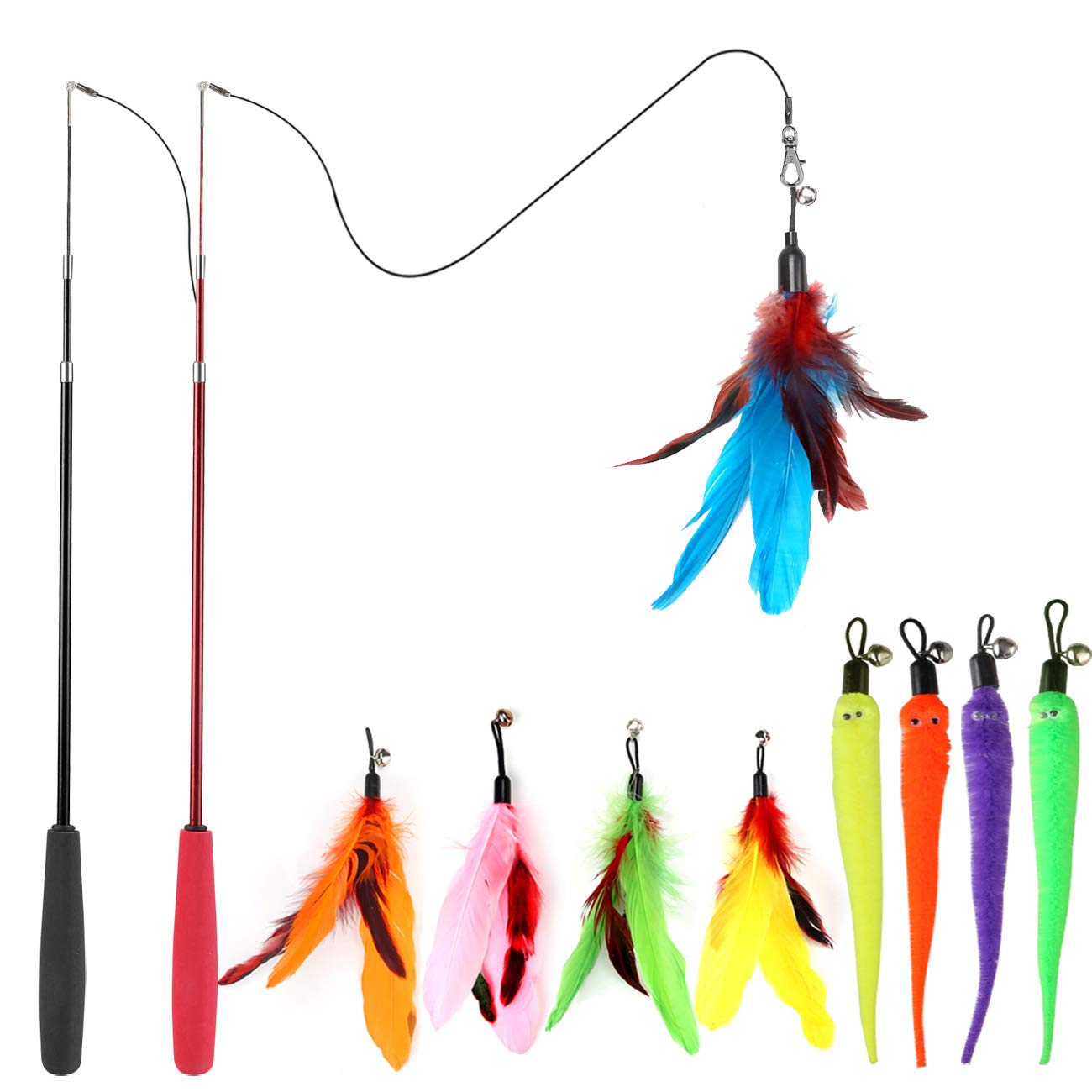
View on AmazonAt just $9.78, this MeoHui set is a steal for the value it provides. It features two retractable wands and nine different feather refills, which is crucial because cats can become "prey-blind" if they play with the exact same toy every day. Switching the feather attachment keeps the "prey" fresh and exciting in your cat's eyes. With a 4.5-star rating, it is highly rated and perfect for cats of all ages.
How to Play Like a Pro: Tips from a Behaviorist
Simply waving a wand in your cat's face isn't enough. To get the most out of your interactive sessions, you need to think like a bird or a mouse. Here are a few professional tips to elevate your play game:
- Mimic the Prey: Mice don't run toward cats; they run away. Move the toy away from your cat, hide it behind furniture, or make it "scurry" along the floor.
- The "Slow Stalk": Don't always move the toy at full speed. Sometimes, a slight wiggle of a feather from behind a corner is more enticing than a fast-moving object.
- Let Them Win: Always allow your cat to catch the toy periodically. If they never "kill" the prey, they can become frustrated, which defeats the purpose of the play.
- The Grand Finale: End the play session by letting them catch the toy one last time, and then immediately offer a small treat or a meal. This completes the "Hunt-Catch-Kill-Eat" cycle, signaling to their body that the mission is successful and it's time to rest.
Preventing Destructive Behavior and Obesity
Two of the biggest health crises facing domestic cats today are obesity and anxiety-related behavioral issues. Interactive play is the most effective "medicine" for both. A 15-minute play session twice a day can burn significant calories, helping to keep your cat at an ideal weight and reducing the risk of feline diabetes. Furthermore, a tired cat is a well-behaved cat. By providing a structured outlet for their energy, you'll find they are much less likely to treat your expensive curtains as a climbing gym.
Strengthening the Human-Feline Bond
Perhaps the most beautiful benefit of interactive toys is the bond it creates between you and your pet. Unlike solo toys (like balls or catnip mice) that the cat plays with alone, wand toys require your participation. This shared activity builds trust and affection. Your cat begins to associate you with the thrill of the hunt and the satisfaction of the catch. For shy or rescued cats, interactive play is often the breakthrough tool we use to help them feel confident in their new home.
Conclusion: A Happy Cat is an Active Cat
In the world of pet care, we often focus on the basics: food, water, and litter. But mental and physical stimulation are just as vital to your cat's longevity and happiness. By investing just a few minutes a day into interactive play, you are fulfilling your cat's deepest biological needs. Whether you have a high-energy kitten or a distinguished senior, the right toy—like the MeoHui set—can transform their quality of life. Don't let your little tiger spend another day in boredom; pick up a wand, start the hunt, and watch your cat thrive.