More Than Just Wings: The Hidden Brilliance of Your Pet Bird
When we think of the word "fetch," our minds almost instantly go to a Golden Retriever in a sun-drenched park. But as a pet behaviorist, I’m here to tell you that some of the most enthusiastic participants in interactive play aren’t wearing collars—they’re covered in feathers. Birds, particularly parrots, parakeets, and conures, possess a level of cognitive complexity that rivals primates and young children. To keep these "feathered Einstein’s" happy, we have to look beyond the perch.
For a bird, play isn't just a way to pass the time; it is a biological necessity. In the wild, birds spend the vast majority of their waking hours foraging, navigating complex social structures, and solving problems. When we bring them into our homes, that drive to "work" doesn't disappear. Without a constructive outlet for that energy, birds can develop behavioral issues like feather plucking, excessive screaming, or aggression. This is where the concept of avian "fetch" and interactive play comes into play.
Can Birds Actually Play Fetch?
The short answer is: Absolutely. However, bird fetch looks a little different than the canine version. For a bird, fetch is often a game of retrieve and reward. It involves the bird picking up an object, bringing it to their human, or even dropping an object from a height for the human to "fetch" (a classic game of bird-led humor).
This interaction builds a profound bond between you and your pet. It establishes a language of cooperation and trust. When your bird realizes that interacting with you and their toys results in positive reinforcement—be it a treat, a head scratch, or vocal praise—their confidence soars.
The Psychology of Foraging and Shredding
To understand why certain toys are better for "fetch" and play than others, we have to look at the foraging instinct. In the wild, food isn't served in a ceramic bowl. It’s hidden inside husks, under bark, or high up in trees. Birds are evolutionarily hardwired to shred, tear, and explore textures to find what they need.
Interactive toys that combine movement with shreddable materials act as a surrogate for this natural behavior. When a bird tosses a toy or carries it across their cage, they are engaging their large motor skills. When they stop to shred the toy, they are engaging their fine motor skills and beak health. It is a full-body workout for their brain and body.
The Benefits of Mental Stimulation
- Prevents Boredom: A bored bird is a stressed bird. High-energy play keeps their minds occupied.
- Physical Exercise: Flapping, climbing, and retrieving toys helps maintain cardiovascular health and prevents obesity.
- Beak Maintenance: Shredding natural materials like sola wood or paper helps keep beaks trimmed and healthy.
- Emotional Bonding: Shared play sessions reduce the likelihood of a bird becoming "one-person centric" or territorial.
Choosing the Right Tools for the Game
Not every toy is suitable for the high-intensity play that conures and cockatiels crave. You need items that are lightweight enough to be tossed, yet durable enough to withstand the incredible crushing power of a parrot's beak. Texture is also key. Birds are highly tactile creatures; they love the feel of crinkly paper, soft wood, and the satisfying "clack" of a sand hammer or bell.
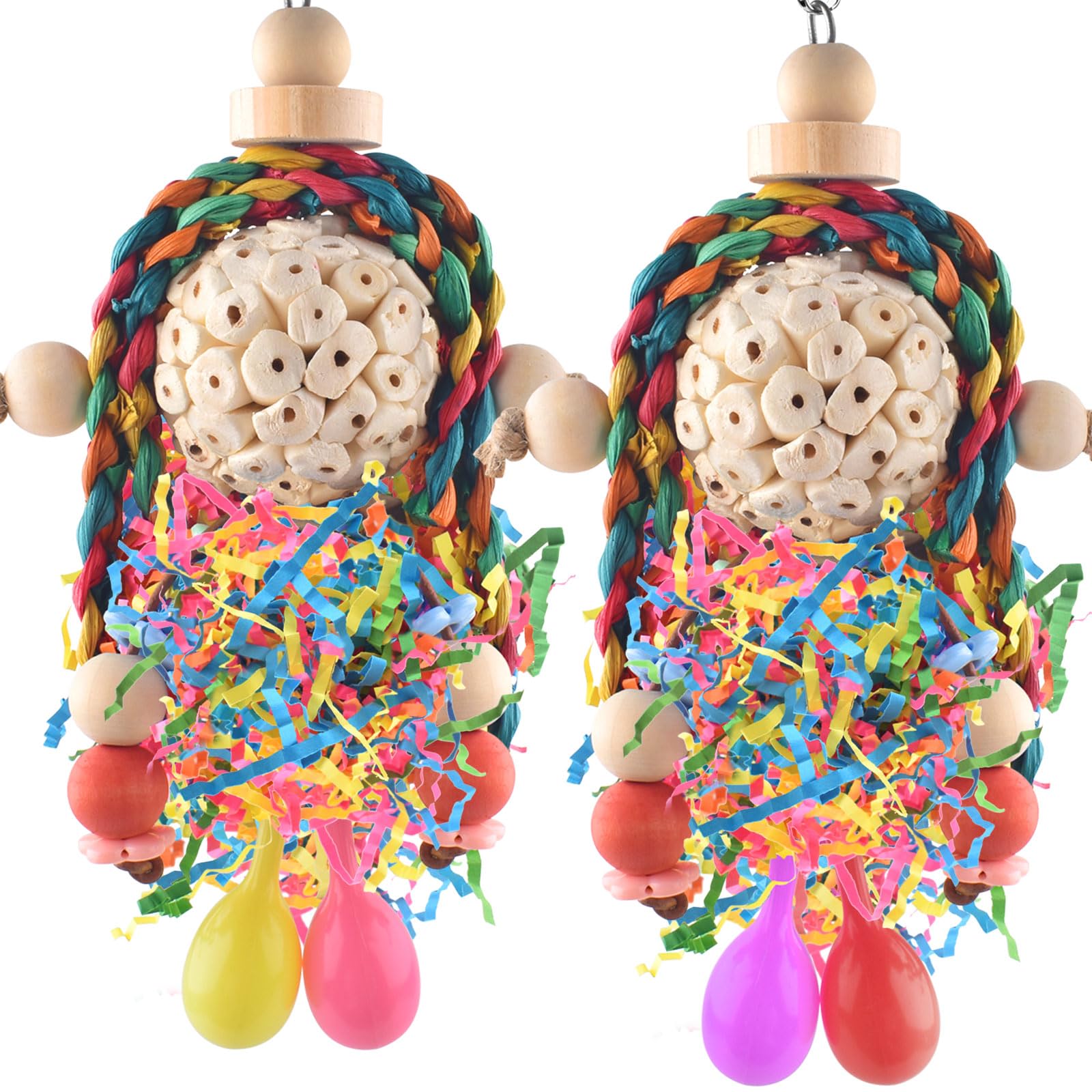
If you are looking for the perfect entry point into the world of interactive avian play, you need a kit that hits all these sensory notes. Foraging, shredding, and noise-making are the trifecta of bird happiness.

Bissap Conure Toys, 2PCS Bird Parrot Foraging Shredder Hangi...
Highly recommended bird fetch with a 4.6★ rating.
View on AmazonThe Bissap Conure Toys set is an exceptional choice for small to medium parrots. With a 4.6-star rating, it is highly rated and perfect for birds who love to stay busy. The inclusion of sola balls makes them perfect for a game of "foot-toy fetch," while the sand hammer adds an auditory element that many birds find irresistible. At just $1.14, it is perhaps the most cost-effective investment you can make in your bird’s mental health.
How to Teach Your Bird to Fetch
Ready to start? Training your bird to fetch is easier than you think, provided you have patience and plenty of positive reinforcement. Here is a quick step-by-step guide:
Step 1: The Interest Phase
Introduce a small, lightweight toy (like a sola ball). When your bird touches it with their beak, say "Yes!" or use a clicker, and give them a small seed or millet spray. Repeat this until they are eagerly touching the toy whenever you present it.
Step 2: The Pick-Up
Wait for your bird to actually grip the toy in their beak before rewarding. You are looking for them to take "ownership" of the object.
Step 3: The Retrieval
Place your hand out a few inches away. When the bird moves toward you while holding the toy, reward them. Eventually, only reward them when they drop the toy into your hand. This is the hallmark of a successful fetch!
Creating a Rotating Toy Environment
One mistake many bird owners make is leaving the same toys in the cage for months. Birds are smart; they habituate to their environment quickly. To keep the "fetch" instinct alive, you should rotate their toys weekly. By swapping out a shredder toy for a bell toy or a foraging ball, you recreate the novelty of the wild.
Remember, a bird that plays is a bird that thrives. By incorporating interactive games and high-quality foraging toys into their daily routine, you aren't just keeping them busy—you are giving them a life filled with purpose, movement, and joy. So, the next time you think about playing fetch, don't just look for the dog. Look for your feathered friend, too.