Understanding the "Chew": Why Your Bird Isn’t Just Being Destructive
If you’ve ever returned home to find your favorite wooden picture frame or the corner of an expensive book looking a bit... distressed, you’ve experienced the power of the parrot beak. To the uninitiated, this might look like a behavioral problem or a fit of avian pique. However, as a pet behaviorist, I can tell you that for your feathered friend, chewing is as natural as breathing.
In the world of birds, a busy beak is a happy beak. Whether you share your home with a tiny Lovebird or a majestic Macaw, providing appropriate chewing outlets is one of the most important things you can do for their physical and psychological well-being. At PawPicks, we believe that understanding these natural instincts is the first step toward a harmonious life with your pet.
The Biological Necessity: Beak Maintenance
A bird's beak is a marvel of biological engineering. Made of keratin—the same protein found in human fingernails and hair—it is constantly growing throughout the bird's life. In the wild, birds spend a significant portion of their day using their beaks to forage, crack open hard nuts, strip bark from trees, and excavate nesting cavities. These activities naturally wear down the beak, keeping it at the perfect length and sharpness.
Without something to chew on, a bird's beak can become overgrown. An overgrown beak is more than just an aesthetic issue; it can make it difficult for your bird to eat, preen their feathers, and climb around their cage. Providing high-quality chew toys acts like a natural file, ensuring their "primary tool" stays in peak condition.
The Psychological Edge: Beating the "Boredom Blues"
Parrots are among the most intelligent creatures on the planet. Species like the African Grey or the Amazon Parrot possess cognitive abilities comparable to a human toddler. Imagine the frustration of a brilliant mind trapped in a cage with nothing to do. This is where destructive behaviors like feather plucking, excessive screaming, and aggression often begin.
Chewing serves as a form of "foraging play." It provides essential mental stimulation and sensory feedback. When a bird crunches through a wooden block, they aren't just destroying an object; they are solving a puzzle, feeling the texture, and satisfying a deep-seated instinct to manipulate their environment.
- Stress Reduction: The physical act of chewing releases endorphins in birds, helping them stay calm.
- Intellectual Engagement: Figuring out how to dismantle a complex toy keeps their brains active.
- Physical Exercise: Climbing on and wrestling with large toys provides a full-body workout.
Choosing the Right Materials for Your Bird
Not all chew toys are created equal. To keep your bird engaged, you need a variety of textures and resistance levels. Hardwoods are great for large beaks that need a challenge, while softer woods like pine or balsa are perfect for smaller birds or those who enjoy the immediate gratification of "shredding."
Safety is paramount. Always look for toys that use non-toxic, vegetable-based dyes and bird-safe hardware. You want to avoid any materials that could splinter dangerously or contain heavy metals like lead or zinc. This is why we carefully vet the products we recommend to our PawPicks community.

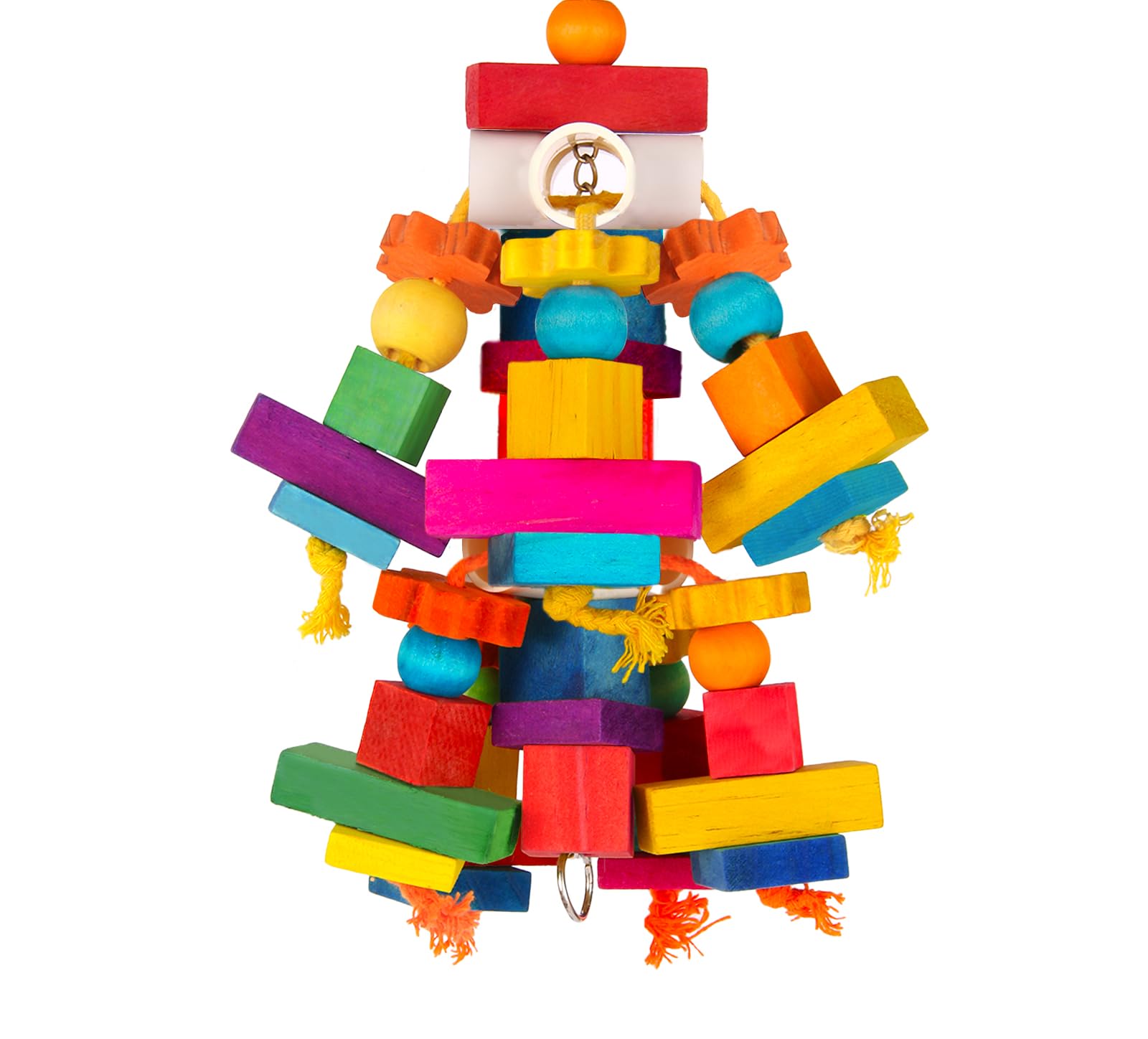
Kyouki Large Parrot Toy, Bird Toys for Cockatoos,Macaws, Afr...
Highly recommended bird chew with a 4.4★ rating.
View on AmazonWhy the Kyouki Large Parrot Toy is a Game-Changer
When it comes to satisfying the intense chewing needs of medium to large birds, the Kyouki Large Parrot Toy is an standout choice. It is highly rated and perfect for birds who need a mix of physical challenge and visual stimulation. The multicolored natural wooden blocks are dyed with bird-safe pigments, appealing to a parrot's highly developed color vision.
What makes this toy particularly effective is its size and variety. It features multiple layers of wooden blocks and knots, providing different angles for your bird to grip and chew. Whether you have an African Grey, an Amazon, or even a determined Conure, this toy offers the durability needed to last more than just a single afternoon of play.
Tips for Encouraging Healthy Chewing Habits
If your bird is hesitant to play with new toys, don't worry! Some birds are naturally "neophobic" (afraid of new things). Here are a few expert tips to get them started:
1. The "Monkey See, Monkey Do" Method: Birds are social learners. Try touching the toy and acting excited about it in front of your bird. When they see you interacting with it safely, they’ll be more curious to try it themselves.
2. Strategic Placement: Don't hang a new toy right next to their favorite sleeping perch immediately. Place it on the outside of the cage for a day or two so they can get used to its presence before it enters their personal space.
3. Use Foraging: Tuck a few of their favorite seeds or dried fruits into the crevices of the wooden blocks. This gives them a delicious incentive to start chewing and exploring the toy.
Conclusion: A Small Investment for a Lifetime of Health
Providing your bird with high-quality chew toys like the Kyouki Large Parrot Toy is about more than just protecting your furniture. It’s about respecting their biology and ensuring they lead a rich, fulfilled life. A bird that is allowed to chew, shred, and destroy appropriate toys is a bird that is less likely to suffer from anxiety and more likely to be a joyful companion.
Remember, a destroyed toy is a sign of a job well done! It means your bird is engaged, healthy, and happy. So, the next time you see a pile of wood chips at the bottom of the cage, give yourself a pat on the back—you’re doing a great job as a bird parent.