The Anatomy of a Chew: Why Your Bird Isn't Being Destructive
As a pet behaviorist, one of the most common complaints I hear from new bird parents goes something like this: "My parrot is destroying everything! They’ve chewed the molding on my doors, shredded my favorite books, and turned their expensive perch into toothpicks. How do I make them stop?"
My answer always catches them off guard: You don't.
To a human, chewing looks like destruction. To a bird, chewing is a fundamental biological necessity, a form of self-care, and a vital source of mental enrichment. In the wild, birds spend hours every day excavating nesting cavities, stripping bark from branches, and foraging for food. This drive doesn't disappear when they cross your threshold and enter a cage. Understanding why your bird needs to chew is the first step toward transforming frustrating behaviors into a harmonious, joyful relationship with your feathered companion.
1. The Physical Need: Beak Maintenance and Health
Unlike human teeth, which stop growing after a certain age, a bird's beak is a dynamic, living structure made of keratin—the very same protein found in our fingernails and hair. This keratin sheath grows continuously throughout your bird's entire life.
In the wild, the daily grind of cracking hard nuts, climbing bark, and digging through soil naturally wears down the beak, keeping it at an optimal length and shape. In captivity, soft diets and lack of physical challenges can lead to overgrown, flaky, or misaligned beaks.
When your bird vigorously chews on wood, cardboard, or natural fibers, they are performing a process called coping. This is the natural grinding down and conditioning of their beak. A healthy chewing habit prevents painful overgrowth, which can otherwise interfere with their ability to eat, preen, and play comfortably.
2. The Mental Need: Fighting the Silent Threat of Boredom
Parrots, cockatoos, and macaws are incredibly intelligent creatures. Some species possess the cognitive abilities of a 3-to-5-year-old human child. Imagine keeping a highly energetic toddler in a small room with absolutely nothing to do. It wouldn't be long before they started drawing on the walls or tearing up cushions.
For birds, boredom is more than just an annoyance—it is a chronic stressor that can lead to severe behavioral issues, such as:
- Feather Plucking (FDB): A self-harming behavior where birds pull out their own feathers due to anxiety or lack of stimulation.
- Excessive Screaming: Loud, persistent vocalizations aimed at getting attention or releasing pent-up energy.
- Aggression: Territorial biting and lunging caused by frustration and lack of physical outlets.
Chewing acts as an active, engaging puzzle. It exercises their minds, satisfies their natural curiosity, and provides a healthy outlet for their incredible physical energy. When a bird is busy dismantling a wooden block, their brain is releasing dopamine—the "feel-good" hormone—which naturally lowers stress levels and promotes a calm, happy demeanor.
3. The Foraging Instinct: Working for Their Fun
In their natural habitats, birds are professional foragers. They don't have food bowls filled with pellets waiting for them; they must search, dig, peel, and crack to get a single meal. This "work" is intrinsically rewarding to them.
Providing chew toys that hide treats, or toys with complex textures that must be peeled apart layer by layer, taps directly into this foraging instinct. It encourages physical movement, balances their energy levels, and satisfies their deep-seated desire to explore and conquer their environment.
How to Choose the Right Chew Toy
Not all chew toys are created equal. As a behaviorist, I always advise pet parents to look for toys that offer a variety of textures, safe materials, and appropriate sizing. If a toy is too hard, a small bird like a conure or lovebird will get frustrated and ignore it. If it is too soft, a large macaw will obliterate it in thirty seconds, leaving you with an empty wallet and an unsatisfied bird.
Look for toys made from natural woods (like pine or balsa), vegetable-dyed colors, sisal rope, and coconut shells. Avoid toys with toxic glues, chemically treated wood, or small plastic parts that could be easily swallowed.
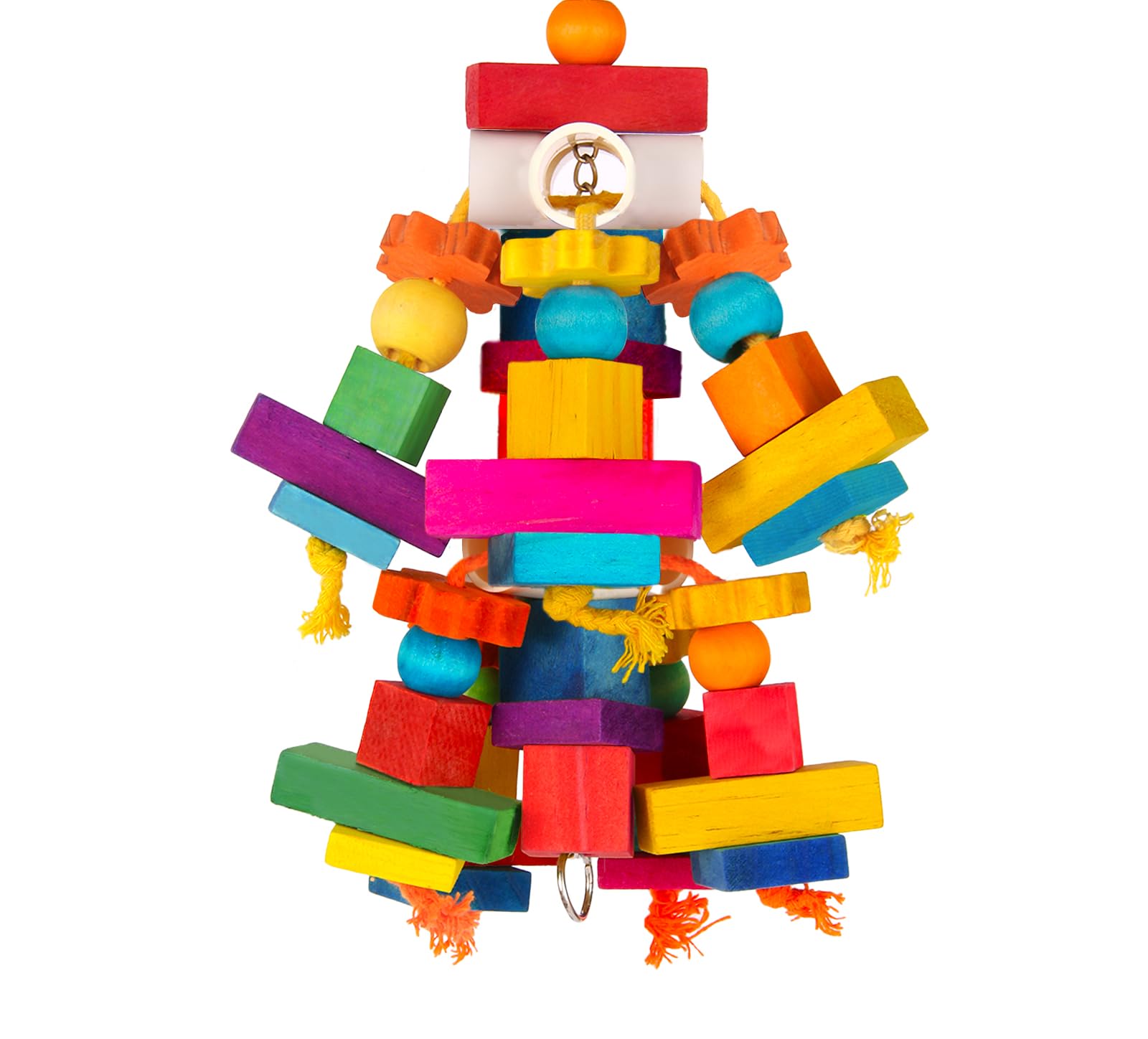
If you are looking for the perfect, all-in-one solution that caters to the chewing instincts of medium-to-large birds, I highly recommend this premium option:

Kyouki Large Parrot Toy, Bird Toys for Cockatoos,Macaws, Afr...
Highly recommended bird chew with a 4.4★ rating.
View on AmazonThis toy is an absolute game-changer for bird owners. Priced at just $9.99, it features multi-colored natural wooden blocks that immediately capture your bird's attention. The varying shapes and vibrant colors stimulate their visual senses, while the durable, non-toxic wood provides the perfect resistance for necessary beak conditioning. It’s an exceptional way to keep your African Grey, Macaw, Cockatoo, or Amazon parrot mentally stimulated and physically active for hours.
Pro-Tips for Introducing New Chew Toys
Some birds are naturally neophobic, meaning they are afraid of new things. If you hang a large, colorful toy in their cage immediately, they might retreat to the furthest corner in fear. To avoid this, follow these simple steps:
- Introduce it slowly: Place the new toy on a table near the cage for a few days so they can get used to looking at it.
- Make it a game: Let your bird see you touching and interacting with the toy. Birds are social learners; if they see you "playing" with it, they will realize it is safe.
- Reward curiosity: If your bird approaches the toy or touches it with their beak, immediately offer them their favorite treat.
- Rotate regularly: To keep their minds sharp, rotate their toys every two weeks. A toy they haven't seen in a month will feel brand new all over again!
Conclusion: Embrace the Mess
Yes, providing your bird with chew toys means you will be sweeping up wood chips, shredded paper, and cardboard bits from your floor. But remember: a messy floor is the sign of a happy, healthy, and psychologically balanced bird.
By investing in high-quality chew toys, you aren't just saving your furniture and door frames—you are actively investing in your bird's long-term health and happiness. Give them the freedom to chew, shred, and play, and watch your feathered friend thrive!