The Mystery Behind the Beak: Why Your Bird Loves to Destroy Things
If you’ve ever left a favorite book, a wooden picture frame, or even your wooden baseboards within reach of your feathered friend, you’ve likely learned a hard lesson: birds love to chew. To new bird owners, this behavior can look like mischief, defiance, or even anger. But as a professional pet behaviorist, I’m here to tell you that chewing is not a behavioral problem—it is a fundamental biological and psychological necessity.
For birds, chewing is as natural as breathing. In this comprehensive guide, we will dive deep into the science behind why birds need a good chew, how it impacts their overall well-being, and how you can satisfy this instinctual urge without sacrificing your household furniture.
1. Beak Conditioning: The Never-Ending Growth
Unlike human teeth, which grow to a certain size and stop, a bird's beak is made of keratin—the exact same material as our fingernails and hair. Because of this, a bird's beak grows continuously throughout its entire life. In the wild, birds naturally wear down their beaks through daily activities: foraging for food, climbing trees, cracking open hard nuts, and chewing on branches.
Without proper chewing outlets in captivity, a bird's beak can easily become overgrown, flaky, or misaligned. An overgrown beak can lead to painful eating difficulties, grooming issues, and may even require veterinary intervention to grind it down safely. Providing sturdy, destructible chew toys is the single best way to help your bird perform self-grooming and keep their beak in tip-top shape.
2. Mental Stimulation and Fighting Boredom
Parrots, cockatoos, macaws, and even smaller birds like conures and lovebirds are incredibly intelligent creatures. In fact, many parrot species possess the cognitive abilities of a human toddler! With high intelligence comes a high demand for mental stimulation. When left in a cage with nothing to do, a bird will quickly become bored.
Boredom in birds is a serious issue that often manifests in destructive and self-harming ways, such as feather plucking, constant screaming, or aggression toward their owners. Chewing acts as a wonderful sensory outlet. It keeps their minds active, satisfies their natural curiosity, and channels their energy into a positive, non-destructive activity. A bird busy shredding a toy is a bird that isn't plucking its feathers or screaming for attention.
3. The Instinctual Need to Forage
In the wild, birds spend up to 70% of their waking hours foraging for food. This involves peeling bark off trees, tearing leaves apart, and shredding wood to find hidden insects or seeds. In our homes, we hand our pets their food in neat little plastic bowls. While convenient, this deprives them of their natural foraging instincts.
Chewing toys that can be shredded, unraveled, or broken apart mimic this natural foraging process. It gives them a sense of accomplishment and satisfies a deep-seated evolutionary drive. By introducing toys with different textures, colors, and layers, you are effectively recreating the wild canopy in their cage.
How to Choose Safe Chewing Materials
Not all materials are safe for your bird to chew on. When shopping for your avian companion, it is crucial to look for non-toxic, pet-safe materials. Here are a few excellent options:
- Natural Softwoods: Pine, balsa, and birch are excellent for birds to easily shred and chew. Avoid treated or painted woods that aren't specifically colored with food-grade dyes.
- Natural Fibers: Sisal, cotton ropes, and coconut fibers offer great texture variety, though you should monitor them for loose threads to prevent entanglement.
- Vegetable-Dyed Wood: Bright, vibrant colors attract birds and stimulate their visual senses, but ensure the dyes are non-toxic and organic.
Our Top Recommendation: The Ultimate Bird Chew Toy
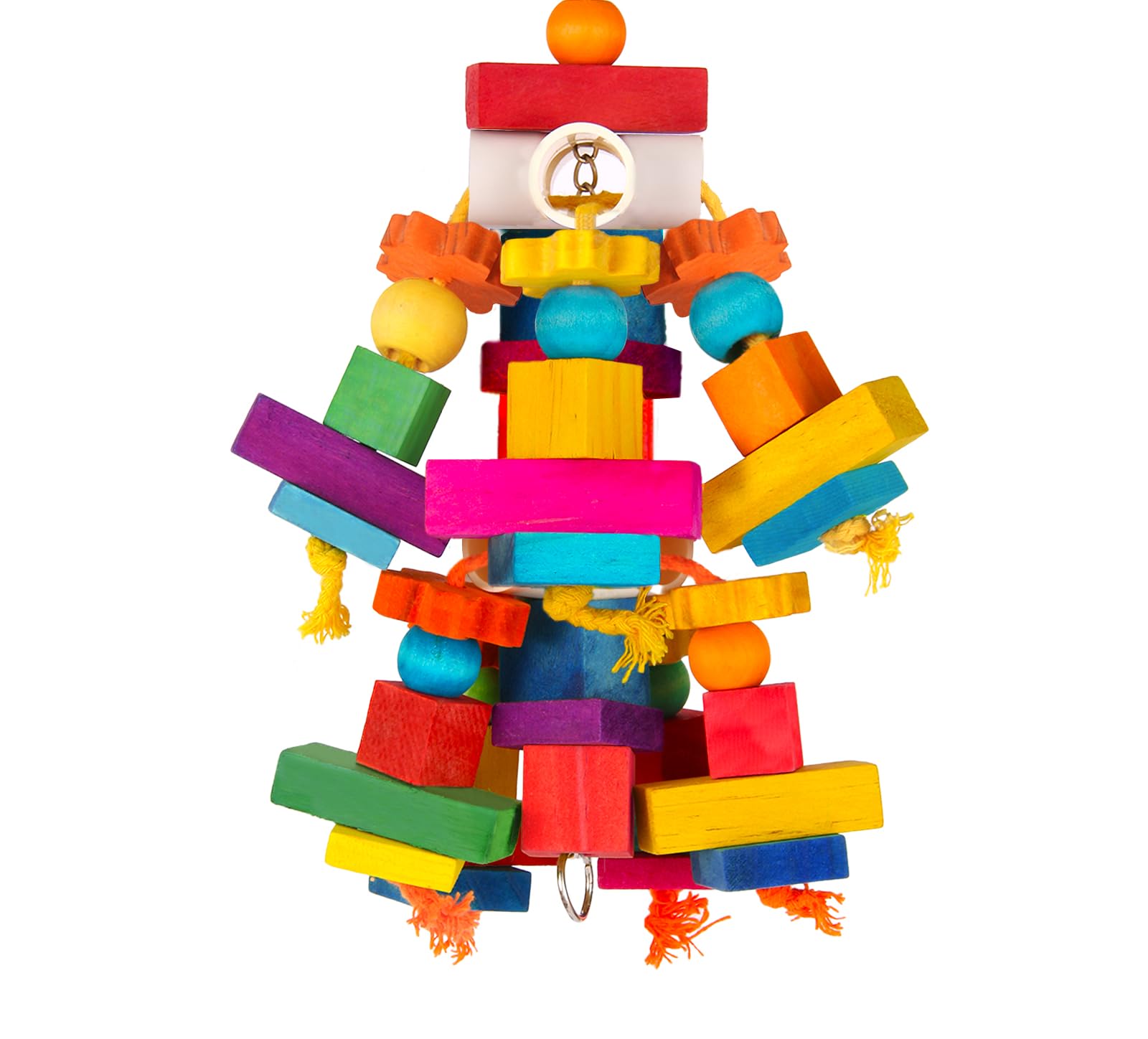
If you are looking for a toy that checks all the boxes—durability, safety, vibrant color variety, and maximum engagement—we highly recommend the Kyouki Large Parrot Toy. It is highly rated and perfect for birds of all sizes, from lovebirds to larger macaws and African greys. It provides the perfect blend of natural wood blocks and bright colors to keep your bird entertained for hours.

Kyouki Large Parrot Toy, Bird Toys for Cockatoos,Macaws, Afr...
Highly recommended bird chew with a 4.4★ rating.
View on AmazonConclusion: A Chewing Bird is a Happy Bird
Understanding your bird's need to chew is the first step toward building a harmonious relationship with your pet. Rather than discouraging the behavior, the key is to redirect it toward safe, designated toys. By providing them with high-quality, destructible chew toys, you protect your home decor, keep their beaks healthy and sharp, and ensure they live a mentally enriched, joyful life. Happy chewing!